Caffeine Pouches vs Pre-workout: A Factual Comparison
🎯 Key Takeaway
Caffeine pouches and pre-workout supplements are different formats. A caffeine pouch is a small pouch placed between the gum and top lip; each HYP pouch contains 100mg of caffeine and is sugar-free, nicotine-free and tobacco-free. Pre-workout supplements are usually powders mixed with water, and their ingredients and caffeine content vary from brand to brand. This guide compares what each contains and how each is used, so you can read labels and make an informed choice.
18+. Contains caffeine (100mg per pouch). Not suitable for children, anyone pregnant or breastfeeding, or people sensitive to caffeine.
When comparing caffeine pouches vs pre-workout, you are choosing between two ways of taking caffeine. One is a pouch with a stated amount of caffeine. The other is a mixed powder that often contains several active ingredients alongside caffeine. This guide sets out the differences in ingredients, format, caffeine per serving and practicalities, and names its sources for any general caffeine information.
Written by: Alex Richards | Reviewed by: HYP Editorial Team
Last updated: 31 October 2026
ℹ️ Transparency Disclosure: We make HYP caffeine pouches, so we have an interest in this topic. We have aimed to keep this comparison factual, to cite named sources for general caffeine information, and not to make claims about how either product affects the body or mind.
⚡ Quick Summary
- Caffeine pouches: a fixed amount of caffeine per pouch (100mg in each HYP pouch), no mixing or liquid needed, used between the gum and top lip.
- Pre-workout supplements: powders that usually combine caffeine with other ingredients such as beta-alanine, citrulline or creatine. Caffeine per scoop varies by brand, so check the label.
Caffeine Pouches vs Pre-Workout at a Glance: Head-to-Head Comparison
This table compares the two formats on factual points. Pre-workout details describe the category in general, based on Healthline's overview of pre-workout ingredients. Always check the label of the specific product you are considering.
| Dimension | Caffeine Pouches (e.g., HYP) | Pre-workout Supplements |
|---|---|---|
| Ingredient Profile | HYP: 100mg caffeine per pouch. Sugar-free, nicotine-free and tobacco-free. | Commonly caffeine plus ingredients such as beta-alanine, citrulline and creatine, with sweeteners and flavourings. |
| How It Is Used | Placed between the gum and top lip. See how caffeine pouches work. | Powder mixed with water and drunk. |
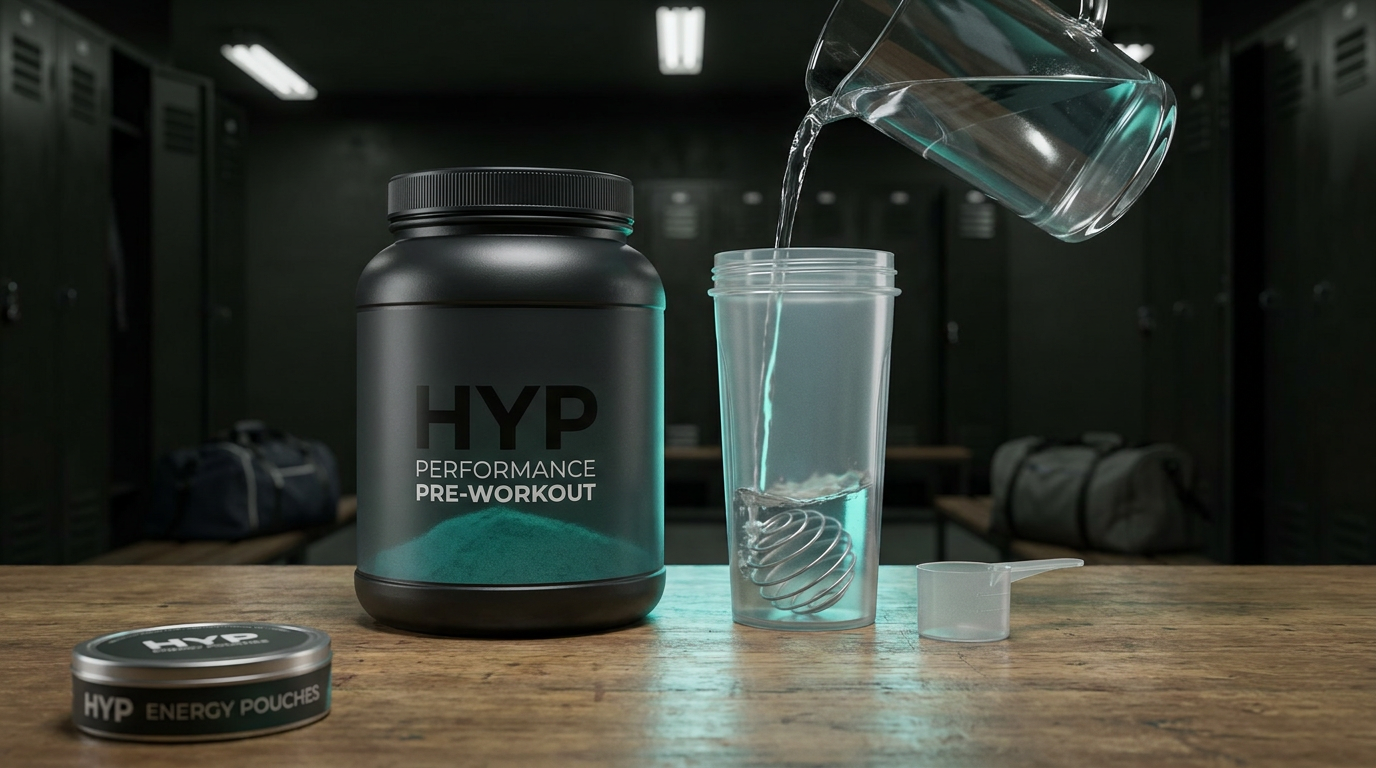
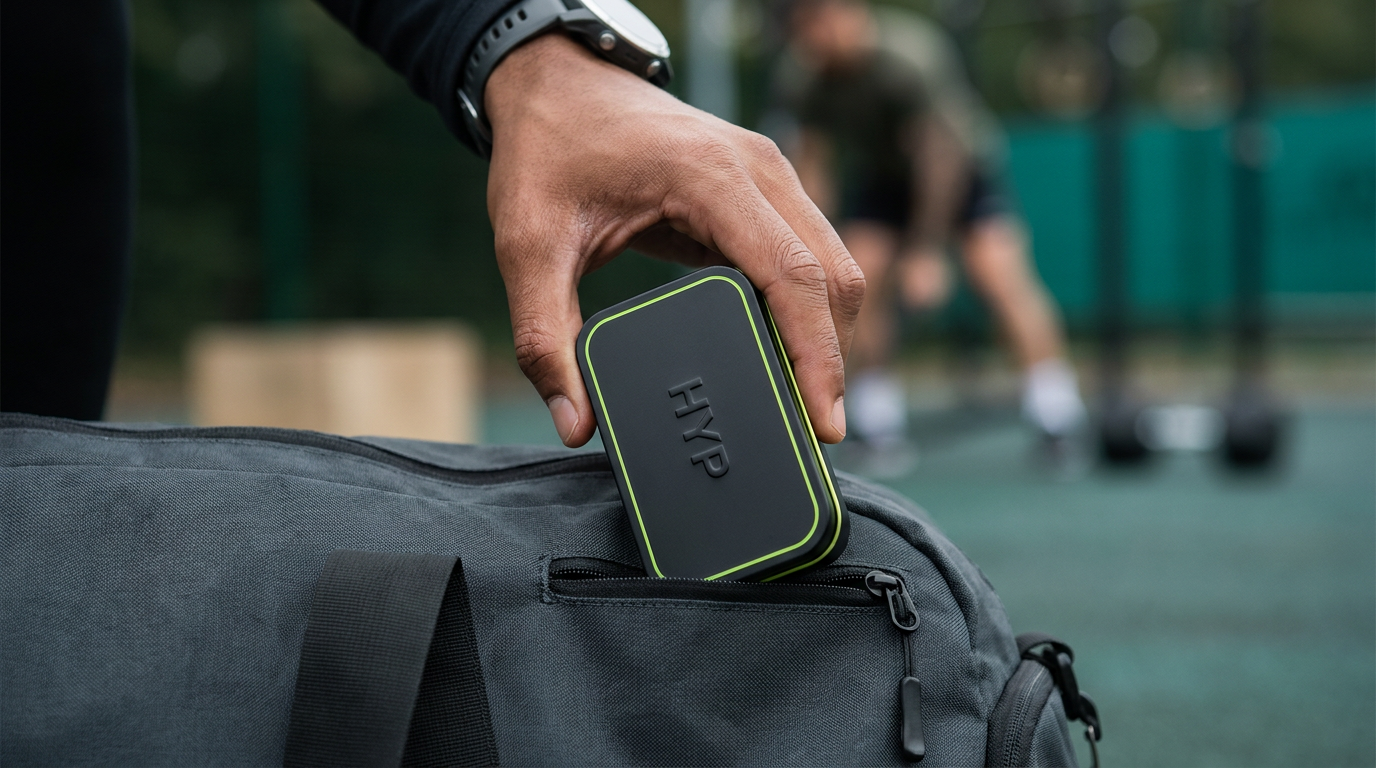
| Convenience & Portability | Small tin that fits in a pocket. No mixing needed. | Needs a tub, scoop, shaker and water. |
| Caffeine Per Serving | Stated on the pack: 100mg per HYP pouch. | Varies by brand. Some products use blends that do not list the amount of each ingredient, so read the label. |
| Daily Use Guidance | Maximum 4 pouches a day, 3 to 4 hours apart. | Follow the manufacturer's label. |
| Typical Use | Used by adults at different times of day, within the label guidance. | Usually taken before exercise. |
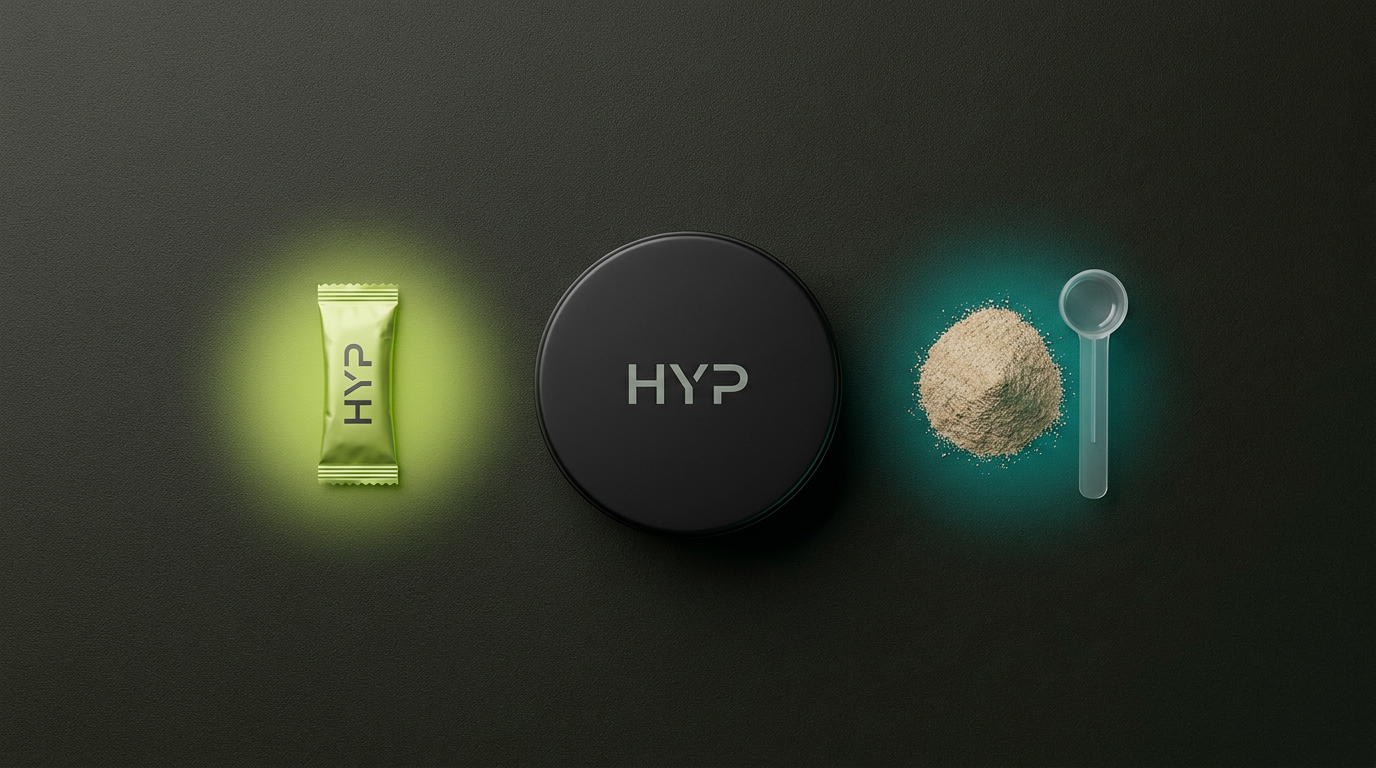
The main difference lies in the formulation. A HYP pouch contains a stated amount of caffeine (100mg) in a pouch format. Pre-workout formulas typically contain several active ingredients, so the amount of each, including caffeine, differs from product to product.
Caffeine Pouches: What They Are
Suits: adults (18+) who want a measured amount of caffeine in a format that needs no liquid or mixing.
A caffeine pouch is a small, pre-portioned pouch placed between the gum and top lip. Each HYP pouch contains 100mg of caffeine and is sugar-free, nicotine-free and tobacco-free. If you are thinking about using pouches around exercise, read our guide to caffeine pouches and workouts.
Pros:
- Measured Dose: Each HYP pouch contains 100mg of caffeine, so you know how much caffeine you are having.
- No Mixing: No powder, shaker or liquid needed.
- Sugar-free: HYP pouches are sugar-free.
- Discreet & Convenient: A small tin is easy to carry at your desk, on the commute or in a gym bag.
Cons:
- Not a Multi-ingredient Formula: HYP pouches are a caffeine product, not a multi-ingredient pre-workout powder.
- New Habit: The under-the-lip format can take a little getting used to.
- Usage Limits: Maximum 4 pouches a day, 3 to 4 hours apart.
Pre-workout Supplements: What They Are
Suits: adults who want a multi-ingredient powder and are happy to mix a drink.
Pre-workout powders have been sold in the fitness market for many years. According to Healthline, common ingredients include caffeine, beta-alanine, citrulline, creatine and nitrates, and formulas vary widely between brands.
Pros:
- Several Ingredients in One Serving: Caffeine and other ingredients come together in one drink.
- Wide Choice: Many formulas, caffeine levels and flavours are available.
- Familiar Format: Many gym-goers are used to mixing a drink before training.
Cons:
- Needs Mixing: You need a shaker, water and space to prepare it.
- Variable Caffeine Content: Caffeine per scoop differs between brands, so check the label and count it towards your daily total.
- Ingredient Sensations: Healthline notes that beta-alanine can cause a tingling sensation known as paresthesia.
When to Choose Each Option: A Buyer's Guide
Your choice comes down to which format and ingredient list you prefer.
Choose Caffeine Pouches if...
- You want a fixed, labelled amount of caffeine (100mg per HYP pouch).
- You prefer a format with no mixing or liquid.
- You want a sugar-free product.
- You want something small enough to carry in a pocket.
Choose Pre-workout Supplements if...
- You want a powder that combines several ingredients.
- You are happy to mix a drink before exercise.
- You want ingredients other than caffeine in the same serving.
Whichever you choose, count all your caffeine sources (coffee, tea, energy drinks, supplements and pouches) towards your daily total. If you use a pre-workout and a caffeine pouch on the same day, add up the caffeine in both.
Important Considerations
Before trying any new caffeine product, it helps to know the general guidance.
First, research specifically on caffeine pouches is limited. General caffeine guidance comes from bodies such as EFSA, whose 2015 scientific opinion on caffeine concluded that habitual intakes of up to 400mg a day from all sources do not raise concerns for healthy adults who are not pregnant, and that single doses of up to 200mg do not raise concerns for healthy adults. The NHS advises that anyone pregnant should keep caffeine below 200mg a day. The Harvard T.H. Chan School of Public Health gives a general overview of caffeine and where it is found.
Second, a balanced diet, enough water and regular sleep are part of a healthy lifestyle whatever caffeine products you choose. HYP is a caffeine product, not a replacement for any of these.
Finally, HYP is for adults aged 18 and over and is not suitable for anyone pregnant or breastfeeding, or for people sensitive to caffeine. If you take medication or have a health condition, ask your GP or pharmacist about caffeine before use. Keep your total caffeine intake within the guidance from all sources.
Conclusion: Choosing Between the Two
In the comparison of caffeine pouches vs pre-workout, the two products do different jobs. A HYP pouch gives you a stated 100mg of caffeine in a pocket-sized, sugar-free, nicotine-free format with no mixing. A pre-workout gives you several ingredients in one drink, with caffeine content that varies by brand. Read labels, count all your caffeine sources and stay within the guidance.
We created HYP to offer caffeine in a simple pouch format. If that format suits you, you can join The Circle or try our Discovery Pack.
18+. Contains caffeine (100mg per pouch). Not suitable for children, anyone pregnant or breastfeeding, or people sensitive to caffeine. Maximum 4 pouches a day, 3 to 4 hours apart.
Try The Discovery Pack
How Do Caffeine Pouch Ingredients Compare to Pre-workout Formulas?
Caffeine pouches and pre-workout supplements differ in their ingredient lists. A HYP caffeine pouch contains 100mg of caffeine and is sugar-free, nicotine-free and tobacco-free. Pre-workout powders typically combine caffeine with several other ingredients. Healthline lists common examples:
- Citrulline: an amino acid included in many pre-workout formulas.
- Creatine: a compound widely used in sports supplements.
- Beta-alanine: an amino acid that Healthline notes can cause a tingling sensation.
- Nitrates: often from sources such as beetroot.
- Sweeteners and flavourings: standard in powdered mixes.
Because pre-workout formulas vary, compare products by reading the label for the amount of caffeine per serving and the full ingredient list.
How Is Each Format Used?
The two formats are used in different ways:
- Caffeine pouches: Place one pouch between your gum and top lip. Do not chew or swallow it, and dispose of it responsibly after use. Maximum 4 pouches a day, 3 to 4 hours apart. Our guide to how caffeine pouches work explains the format in more detail.
- Pre-workout drinks: Mix the stated scoop with water as directed on the label and drink it, usually before exercise.
Research on caffeine pouches specifically is limited, so we do not make claims about how quickly or how strongly either format works.
How Should You Compare Cost per Serving?
Prices change, so we have not listed them here. To compare fairly, divide the price of a pack (including VAT and any delivery charge) by the number of servings it contains. For pouches, one serving is one pouch. For pre-workout, check the number of scoops per tub on the label, as serving sizes differ between brands.
It is also worth comparing caffeine per serving rather than price alone, since a cheaper serving may contain a different amount of caffeine.
What Should You Know About Caffeine Intake With Either Format?
Both formats contain caffeine, so the same general guidance applies to each:
- Count every source: EFSA's 2015 opinion uses 400mg a day from all sources as the level for healthy adults who are not pregnant. Four HYP pouches contain 400mg of caffeine, so any coffee, tea, energy drinks or supplements you have on the same day count towards the same total.
- Timing: Caffeine late in the day can affect sleep for some people. Think about when you have your last caffeine of the day.
- Your mouth: HYP makes no claims about oral health. If you have any concerns about your mouth, stop using pouches and speak to a dentist.
Caffeine pouches are intended only for adults aged 18 and over. HYP is for adults aged 18 and over and is not suitable for anyone pregnant or breastfeeding, or for people sensitive to caffeine. Anyone taking prescription medication or managing a medical condition should speak to a doctor about caffeine.
Frequently Asked Questions
What is better for pre-workout: caffeine pouches or a traditional supplement?
Neither is better for everyone; they are different products. A caffeine pouch gives you a stated amount of caffeine (100mg per HYP pouch) with no mixing. A pre-workout powder combines caffeine with other ingredients in a drink. Choose the format and ingredient list that suit you, and count the caffeine in either towards your daily total.Can I use a caffeine pouch before exercise?
Adults can use a HYP pouch at any time of day within the label guidance. HYP is a caffeine product, not a sports supplement, and we make no claims about exercise. Maximum 4 pouches a day, 3 to 4 hours apart.How do caffeine pouches work?
You place a pouch between your gum and top lip and leave it there; you do not chew or swallow it. Each HYP pouch contains 100mg of caffeine. Our guide to how caffeine pouches work explains the format. Research on caffeine pouches specifically is limited, so we do not make claims about how quickly they work.Is 200mg of caffeine a lot before exercise?
EFSA uses 200mg as the single-dose level that does not raise concerns for healthy adults. According to EFSA's 2015 opinion, single doses of up to 200mg from all sources, and up to 400mg a day, do not raise concerns for healthy adults who are not pregnant. One HYP pouch contains 100mg. Do not use pouches back to back: Maximum 4 pouches a day, 3 to 4 hours apart. Pre-workout caffeine varies by brand, so check the label.How many caffeine pouches can I use a day?
Maximum 4 pouches a day, 3 to 4 hours apart. Each HYP pouch contains 100mg of caffeine, so four pouches add up to 400mg, the daily level EFSA uses for healthy adults from all sources. If you also have coffee, tea, energy drinks or other caffeine, use fewer pouches so your total stays within that level. Start with one pouch.What causes the tingling some people get from pre-workout?
Beta-alanine, a common pre-workout ingredient, can cause a tingling sensation known as paresthesia. This is noted by Healthline. Ingredient lists differ between products, so check the label of any product you use, including the ingredient list on our product page.Are HYP pouches nicotine-free?
Yes. HYP pouches are nicotine-free and tobacco-free. Each pouch contains 100mg of caffeine. HYP is a caffeine product for adults aged 18 and over.How does the caffeine in a pouch compare with an energy drink?
Compare the caffeine per serving shown on each label. Each HYP pouch contains 100mg of caffeine and is sugar-free. The caffeine and sugar in energy drinks vary by brand and can size, so check the label of the specific drink. Both count towards the same daily caffeine total.What is the main ingredient difference between caffeine pouches and pre-workout?
The main difference is the format and the ingredient list. A HYP pouch contains 100mg of caffeine and is sugar-free, nicotine-free and tobacco-free. Pre-workout powders usually contain caffeine plus ingredients such as beta-alanine, citrulline and creatine, along with sweeteners and flavourings.Can I use a caffeine pouch for things other than the gym?
Yes. HYP is a caffeine product, not only a gym product. Adults may choose to use a pouch at work, while studying or when travelling, in the same way some people choose a cup of coffee or tea. The same guidance applies: Maximum 4 pouches a day, 3 to 4 hours apart, and count all other caffeine you have that day.References
- EFSA Panel on Dietetic Products, Nutrition and Allergies - (2015). Scientific opinion on caffeine, covering single doses of up to 200mg and habitual intakes of up to 400mg a day for healthy adults.
- NHS - Guidance on foods and drinks in pregnancy, including the 200mg a day caffeine limit.
- Harvard T.H. Chan School of Public Health - (Content reviewed periodically). A general overview of caffeine and its sources.
- Healthline - (Content reviewed periodically). An article describing common ingredients in pre-workout supplements.