Are Caffeine Pouches Safe? The Complete UK Guide for Adult Users

🎯 Key Takeaway
To determine if are caffeine pouches safe, one must analyse their ingredients, formulation, and usage patterns; for most healthy adults, high-quality, sugar-free pouches used within recommended limits are a safe energy alternative. Safety is highly dependent on ingredients. We recommend choosing pouches that are sugar-free, nicotine-free, and pH-neutral to minimise risks to oral health and overall wellness. Compared to sugary energy drinks, caffeine pouches can be a healthier choice by eliminating sugar and acid. Responsible usage is crucial; adhering to the UK's recommended 400mg daily caffeine limit and understanding your own tolerance is key to avoiding side effects.
With their recent surge in popularity, caffeine pouches have become a hot topic in the UK. As of September 2026, they're everywhere, promising a convenient, clean energy boost. But with this new attention comes a critical question: are caffeine pouches safe? The conversation is often clouded by hype and confusion with other oral products. This guide cuts through the noise. We've created an evidence-based breakdown for adults who want the facts. We'll analyse the ingredients that matter, address concerns about oral health, compare pouches to traditional energy sources like coffee and energy drinks, and provide clear, responsible usage guidelines.
👤 Written by: HYP Content Team
Reviewed by: HYP Editorial Team, Sports Nutrition & Performance Specialists
Last updated: 15 September 2026
ℹ️ Transparency Disclosure
Transparency: This article explores the safety of caffeine pouches based on an analysis of scientific literature, public health guidelines, and regulatory standards. Our mission is to provide balanced, factual information to help you make an informed choice. Some links may connect to our products. All information is verified by our editorial team to ensure accuracy and balance.
Why do ingredients determine pouch safety?
Yes, the ingredients are the single most important factor in determining pouch safety. Not all caffeine pouches are created equal, and what's inside the pouch directly impacts its effect on your body. A high-quality pouch is a carefully formulated delivery system, not just a bag of caffeine.The core components typically include:
- Caffeine Source: Often caffeine anhydrous, a pure, dehydrated form of caffeine.
- Sweeteners: an effective options use zero-calorie sweeteners like sucralose or stevia instead of sugar.
- Flavourings: Natural flavours are preferable to artificial ones to reduce the chance of irritation.
- Fillers: These provide bulk and are usually plant-based fibres.
- Pouch Material: Made from soft, non-abrasive fabric.
At HYP, our choice of natural, sugar-free, and pH-neutral ingredients is a deliberate safety and performance measure. We believe a cleaner ingredient list delivers a cleaner caffeine hit. This contrasts sharply with lower-quality products that might contain sugar, harsh artificial chemicals, or unnecessary additives that detract from the core purpose of providing Clean Performance Energy.
Caffeine Source and Synergy: Beyond the Milligrams
The primary active ingredient is typically caffeine anhydrous, which is simply the dehydrated, powdered form of caffeine. This allows for precise, consistent dosing in every single pouch. However, a sophisticated formula goes further.
We've found that combining caffeine with other functional ingredients can refine the energy experience. For example, some formulations include L-theanine, an amino acid found in green tea. A literature review published by the National Center for Biotechnology Information (PubMed Central) (2018) concluded that the combination of L-theanine and caffeine can improve cognitive performance by enhancing alertness and attention while reducing distractions. This synergy creates a smoother, more focused energy lift without the jitters some people experience from caffeine alone. It's not just about the amount of caffeine; it's about how it works with other ingredients.
The Hidden Dangers of Sugar and Artificial Additives
Being sugar-free is a massive safety advantage. The World Health Organization (WHO) (2015) strongly recommends reducing the intake of free sugars to combat a range of health issues. Many energy drinks are loaded with sugar, contributing to sugar crashes, weight gain, and increased risk of metabolic diseases. By using zero-calorie sweeteners, caffeine pouches eliminate this risk entirely. The choice of flavourings and fillers matters. Some brands may use harsh artificial flavourings or abrasive filler materials that can cause oral irritation over time. Our focus on natural flavours and soft, plant-based fibres is designed to ensure the pouch is comfortable and non-irritating when parked under your lip. It's all part of our commitment to delivering energy without compromise.
How do pouches affect your gums?
No, for most people, well-formulated caffeine pouches are not inherently harmful to your gums. The primary risks to gum health from oral products typically come from three sources: nicotine, sugar, and high acidity. High-quality caffeine pouches, like HYP, are specifically designed to be free from all three. This directly addresses the main factors that cause gum irritation, decay, and disease.The pouch material itself is made from soft, non-abrasive plant-based fibres designed to sit comfortably against the gum without causing mechanical damage. Still, it's important to practise good oral hygiene, like regular brushing and flossing, regardless of what products you use. If you have pre-existing gum sensitivity, you might want to alternate the placement of the pouch in your mouth. For a deeper dive, check out our complete guide on caffeine pouches and gum health.
Nicotine vs. Caffeine: A Critical Distinction for Oral Health
It's crucial to understand the difference between caffeine and nicotine pouches, as they are often confused. Nicotine is a vasoconstrictor, meaning it narrows blood vessels. When used orally, it can restrict blood flow to the gums, impairing their ability to receive oxygen and nutrients, which may lead to gum recession and an increased risk of periodontal disease over time.
Caffeine does not have this localized vasoconstrictive effect on the gums. Therefore, the question of 'what's worse, caffeine or nicotine pouches?' has a clear answer For oral health: nicotine pouches present a far greater, scientifically recognised risk.
The Role of pH and Sugar in Gum Irritation
Acidity is another major enemy of oral health. Products with a low pH (high acidity) can erode tooth enamel and irritate the soft tissues of your gums. Many energy drinks and even coffee are highly acidic. Our pouches are formulated to be pH-neutral, which helps protect both your teeth and gums from this type of chemical wear.
Similarly, sugar is a well-known culprit in dental problems. It feeds harmful bacteria in your mouth, which then produce acids that lead to plaque buildup, cavities, and gingivitis (gum inflammation). Because HYP pouches are 100% sugar-free, they remove this risk factor entirely, making them a much friendlier option for your mouth than sugary drinks or snacks.
How do pouches compare in safety?
When considering if are caffeine pouches better than energy drinks or coffee, a side-by-side comparison reveals clear advantages. The main difference lies in what you're not getting: sugar, acid, calories, and nicotine.| Factor | HYP Caffeine Pouch (1 pouch) | Typical Energy Drink (250ml) | Filter Coffee (200ml cup) |
|---|---|---|---|
| Caffeine | 50-100mg (controlled) | ~80mg (variable) | ~90mg (variable) |
| Sugar | 0g | 25-30g | 0g |
| Calories | 0 | 110-140 | <5 |
| Acidity (pH) | Neutral | Low (Acidic) | Low (Acidic) |
| Nicotine | 0g | 0g | 0g |
| Convenience | High (Discreet, no liquid) | Low (Bulky can, liquid) | Medium (Requires brewing) |
This data highlights the pouch's 'cleaner' profile. Energy drinks deliver a huge sugar load, which the U.S. Centers for Disease Control and Prevention (CDC) links to serious health issues. In the UK, data from Statista (2021) showed 10% of people consume them several times a week, compounding this risk.
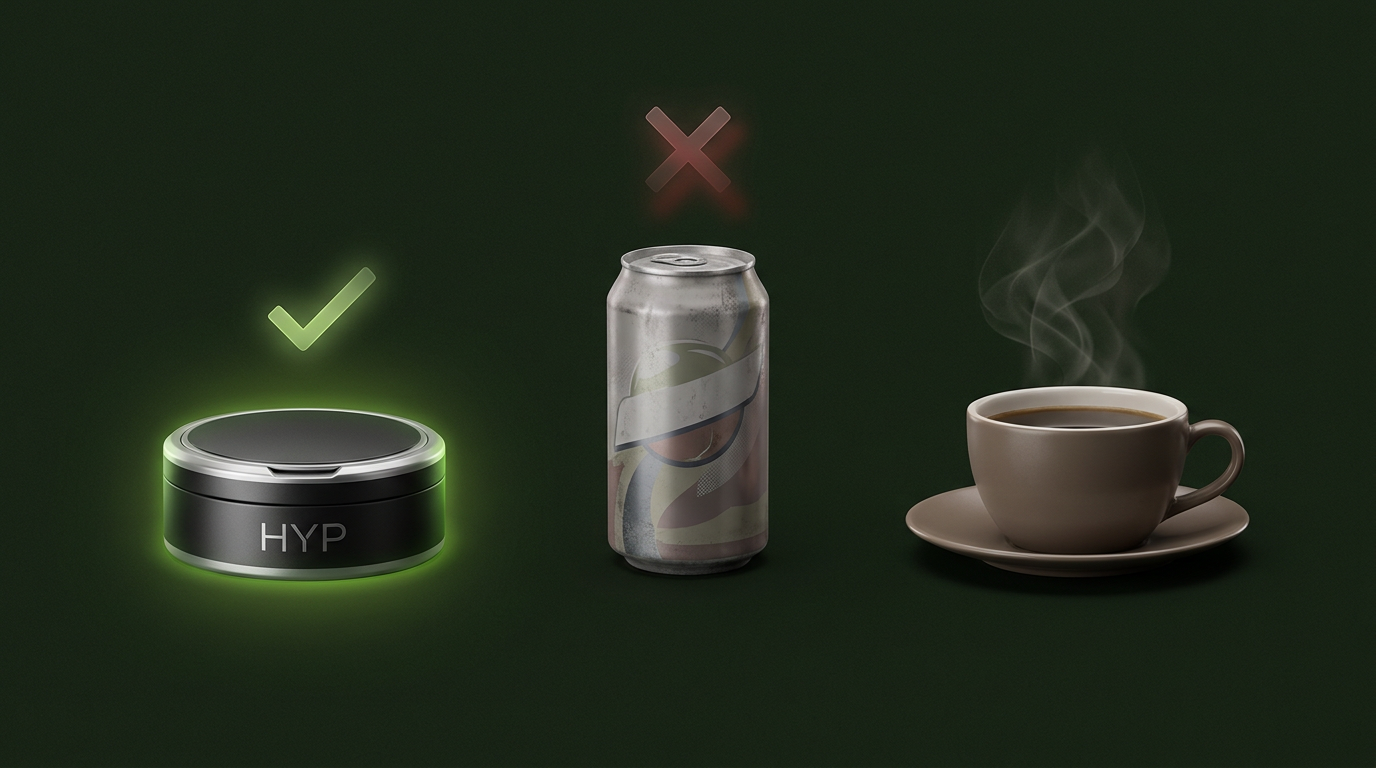
While coffee is a natural choice, its acidity can lead to teeth staining and stomach discomfort for some. You can explore more on how caffeine pouches stack up against coffee. Nicotine pouches, as discussed, carry addiction and oral health risks that caffeine pouches avoid. In this context, a caffeine pouch offers a controlled dose of caffeine without the associated negatives, making it a smarter choice for many. Learn more about how pouches compare to energy drinks.
What are safe usage guidelines for UK adults?
Yes, there are clear guidelines for using caffeine pouches safely and effectively. The key is to treat them as a source of caffeine and respect your body's limits. The National Health Service (NHS) and the Harvard T.H. Chan School of Public Health (2024) advise that most healthy adults can safely consume up to 400mg of caffeine per day.This is your total daily limit from all sources. So, how many caffeine pouches can you have in a day? If you're using a 100mg pouch, the maximum would be four, assuming you're not consuming any other caffeine. If you're new to pouches, we strongly recommend starting with just one to assess your personal tolerance. Don't just jump in. Listen to your body. This responsible approach ensures you get the benefits of Clean Performance Energy without overdoing it.
### Case Study: The Competitive Cyclist
- Challenge: A competitive cyclist was using sugary energy gels and coffee for training, leading to energy spikes, crashes, and stomach issues during long rides.
- Solution: He switched to one 100mg HYP pouch placed under his lip 30 minutes before a race or intense training session.
- Results: He experienced a steady, sustained energy release for over an hour without any digestive distress or post-caffeine crash. The convenience of a hands-free, liquid-free boost was a major advantage during competition.
- Key Insight: A controlled, clean dose of caffeine delivered via a pouch can provide more consistent performance benefits than unpredictable sources like coffee or sugary gels.
Understanding the 400mg Daily Limit
The 400mg guideline from sources like the Harvard School of Public Health is a widely accepted benchmark for healthy adults. It's crucial to remember this is an aggregate total. If you have a coffee in the morning (approx. 90mg) and a tea in the afternoon (approx. 40mg), that's 130mg you need to subtract from your daily pouch allowance. Exceeding this limit regularly can lead to side effects like jitters, anxiety, insomnia, or an upset stomach. Individual tolerance varies, so the 400mg is a ceiling, not a target.
Timing Your Pouch for Performance and Sleep
When you use a pouch is just as important as how many you use. According to a position stand from the International Society of Sports Nutrition (ISSN) (2021), caffeine is most effective for athletic performance when consumed 30-60 minutes before exercise. This makes a pouch effective for that pre-session boost.
Conversely, you must protect your sleep. Caffeine has a half-life of around 5-6 hours, so using a pouch late in the evening can seriously disrupt your ability to fall asleep and get quality rest. We recommend ceasing all caffeine use at least 6-8 hours before your planned bedtime.
Who Should Avoid Caffeine Pouches? A Precautionary Guide
Yes, certain groups should avoid caffeine pouches and other caffeine products altogether. While they are safe for most healthy adults when used responsibly, it's our responsibility to be clear about who should abstain. As a brand committed to safety, we believe this is non-negotiable.
The main groups who should avoid caffeine pouches are:
- Individuals Under 18: As highlighted in reports from sources like the BBC (2024), there are significant concerns about the effects of caffeine on the developing brains and sleep patterns of adolescents.
- Pregnant or Breastfeeding Women: The NHS advises limiting caffeine intake during pregnancy, so it's best to avoid concentrated sources like pouches.
- People with Pre-existing Health Conditions: This includes anyone with a heart condition, high blood pressure, anxiety disorders, or a history of stomach ulcers. Stimulants can exacerbate these conditions.
- Those with Caffeine Sensitivity: Some people are genetically slow metabolisers of caffeine and can experience strong negative effects even from small doses.
If you have any underlying medical condition or are taking medication, You should consult your GP before using caffeine pouches. This is a matter of personal health and safety.
What are common questions about pouch safety?
So, are caffeine pouches safe overall?
For most healthy adults, high-quality, sugar-free caffeine pouches are generally considered safe when used responsibly and within the recommended 400mg daily limit. The answer to "are caffeine pouches safe" ultimately depends on the product's ingredients, your personal health status, and your usage habits. Choosing a reputable brand and listening to your body is key.Are caffeine pouches harmful to gums?
Unlike nicotine pouches, which can damage gums by restricting blood flow, properly formulated caffeine pouches are not considered harmful to gums. Choosing options that are sugar-free, pH-neutral, and made from soft materials significantly minimises any risk of irritation or decay. Good oral hygiene is typically recommended for maintaining gum health.What's worse, caffeine or nicotine pouches?
Nicotine pouches are significantly worse for your health due to the highly addictive nature of nicotine and its well-documented negative effects on cardiovascular and oral health. Caffeine, a widely consumed stimulant, does not carry the same addiction liability or broad range of health risks when used in moderation by healthy adults.Are caffeine pouches better than energy drinks?
From a health perspective, caffeine pouches are often a better choice because they deliver caffeine without the high sugar content, calories, and acidity found in most energy drinks. This helps you avoid sugar crashes, unnecessary calorie intake, and potential long-term health issues associated with high sugar consumption, making them a cleaner option.How many caffeine pouches can you have in a day?
You should adhere to the 400mg daily caffeine limit recommended by health authorities like the NHS. If one pouch contains 100mg of caffeine, you should not exceed four per day. It's crucial to also account for caffeine from other sources like coffee or tea to stay within this safe upper limit.Who should avoid caffeine pouches?
Caffeine pouches should be avoided by several groups, including individuals under 18, pregnant or breastfeeding women, and people with heart conditions, high blood pressure, or a known sensitivity to caffeine. If you have any pre-existing health concerns, You should consult a GP before using any new caffeine product.How long until caffeine pouches kick in?
Effects are typically felt within 10-15 minutes, which is faster than drinks. This is because the caffeine is absorbed directly through the buccal mucosa (the lining of your cheek and gums) into the bloodstream. This rapid uptake offers a quicker boost compared to coffee, which has to pass through your digestive system. You can learn more about how caffeine pouches actually work.Can you get a buzz from caffeine pouches?
Users typically experience a feeling of increased alertness, focus, and energy, which some may describe as a 'buzz'. However, this is a functional stimulation and is distinctly different from the light-headed rush associated with nicotine. It’s designed to enhance performance and concentration, not to provide a psychoactive high.Which caffeine pouches are considered the healthiest?
The healthiest pouches are those that are 100% sugar-free, nicotine-free, and use natural flavours with high-quality caffeine sources. We advise looking for brands that are transparent about their full ingredient list and formulate their products to have a neutral pH, as this is the safest combination for your oral health and overall well-being.Do you spit with caffeine pouches?
No, you do not need to spit. Unlike traditional oral tobacco products, the pouch is designed to be parked discreetly between your gum and lip. The contents, including the flavour and caffeine, are absorbed through the lining of the mouth. Once the effect has worn off, you simply and cleanly dispose of the pouch.What are important considerations?
While current evidence suggests well-formulated caffeine pouches are safe for adult use, they are a relatively new product category. Therefore, long-term epidemiological studies on their specific health effects are not yet available. The conclusions in this article are based on established science regarding their individual ingredients (caffeine, sweeteners, etc.) and the well-understood mechanism of buccal absorption.Caffeine pouches are one of many ways to consume caffeine. Traditional alternatives like coffee and tea offer their own benefits, such as antioxidants, but can be inconvenient or cause issues like teeth staining. Other options include caffeine pills and pre-workout drinks, each with different absorption rates, ingredient profiles, and potential side effects. An effective choice depends on your personal goals, convenience, and physiological response.
This guide is for informational purposes and is not a substitute for professional medical advice. If you have any pre-existing health conditions, particularly cardiovascular issues, anxiety disorders, or are taking medication, You should consult your General Practitioner (GP) before incorporating caffeine pouches or any new supplement into your routine.
Making an Informed and Safe Energy Choice
So, are caffeine pouches safe? The answer is not a simple yes or no, but an informed 'it depends on quality and responsibility'. For the health-conscious adult, a high-quality, sugar-free, and nicotine-free pouch represents a demonstrably safer alternative to sugary energy drinks and a more convenient, tooth-friendly option than coffee. Safety hinges on choosing a well-formulated product and adhering to sensible daily caffeine limits.
By prioritising clean ingredients and transparent dosing, HYP is made for the session. We've created a product for performance-minded adults who demand a better energy source. If you're ready to experience a cleaner, more controlled boost without the sugar crash or nicotine, we invite you to explore the HYP Discovery Pack and find the flavour that fits your routine. Ditch the cans & coffee. Switch to the pouch.
Related reading
- Caffeine and the Menopause: What UK Guidance Says and How to Keep Track
- Does Caffeine Affect You More as You Get Older? A Guide for UK Adults Over 40
References
- International Society of Sports Nutrition (ISSN) - Journal Article (2021). Caffeine supplementation at 3-6 mg/kg body mass improves various aspects of athletic performance, including muscular endurance and strength.
- National Center for Biotechnology Information (PubMed Central) - Literature Review (2018). The combination of L-theanine and caffeine improves cognitive performance, enhancing alertness and attention while reducing distraction.
- U.S. Centers for Disease Control and Prevention (CDC) - Governmental Data. Frequent consumption of sugar-sweetened beverages is linked to serious health problems including obesity, type 2 diabetes, and heart disease.
- Harvard T.H. Chan School of Public Health - Academic Guide. Moderate caffeine intake, up to 400mg per day, can be part of a healthy diet for most adults.
- Statista - Statistical Report (2021). In 2021, 10% of UK respondents stated they consume energy drinks several times a week.
- World Health Organization (WHO) - Global Guideline (2015). Recommends reducing daily intake of free sugars to less than 10% of total energy intake to prevent negative health outcomes.
- National Collegiate Athletic Association (NCAA) - Professional Organisation Guidance. High doses of caffeine (resulting in urinary concentrations >15 mcg/ml) are banned in competition, highlighting the need for controlled dosage.
- BBC News - News Report (2024). Highlights growing concerns from schools and parents regarding the use of caffeine pouches among teenagers in the UK.
- Nationwide Children's Hospital - Health Advisory. Advises that caffeine is not recommended for children under 12 and that intake should be limited for adolescents, warning against concentrated sources like pouches.
- YourGP - Medical Practice Blog. A private practice in Scotland discusses the potential dangers of caffeine pouches for teenagers, including impacts on sleep, anxiety, and heart health.
Conclusion
Making an Informed and Safe Energy Choice
In summary, are caffeine pouches safe is a determination that depends entirely on product quality and user responsibility. For the informed adult user, a high-quality, sugar-free, and nicotine-free pouch represents a demonstrably safer alternative to sugary energy drinks and a more convenient, tooth-friendly option than coffee. Our assessment is that safety hinges on choosing a well-formulated product and adhering to sensible daily caffeine limits.
By prioritising clean ingredients and transparent dosing, HYP is designed for performance-minded adults who demand a better energy source. If you're ready to experience a cleaner, more controlled boost without the sugar crash or nicotine, explore the HYP Discovery Pack to find the flavour that fits your routine.