Does Caffeine Affect You More as You Get Older? A Guide for UK Adults Over 40
🎯 Key Takeaway
Caffeine metabolism can vary with age as physiological factors such as hepatic blood flow change over time.
• The biological half-life of caffeine—the time it takes for the concentration of caffeine in your body to reduce by half—can vary between individuals.
• Changes in sleep architecture as we age may make late-day caffeine consumption more likely to disturb rest.
• Choosing alternative formats allows for measured caffeine intake.
Continue reading to explore the general science behind caffeine response and practical routines for daily intake.
An afternoon espresso or strong mug of tea that felt harmless in your twenties can lead to restless nights at 45. If you find yourself asking why caffeine seems to affect you differently now, the answer often lies in how the body processes stimulants over time. Understanding caffeine as you get older reflects measurable physiological shifts. This guide provides an overview of hepatic processing and sleep architecture, alongside a practical routine template for adults over 40.
Best For: UK adults aged 40 and older noticing shifts in stimulant tolerance and busy professionals seeking steady daily routines.
Not Ideal For: Individuals under 18, pregnant or breastfeeding women, or anyone sensitive to caffeine.
👤 Published by: HYP
Last updated: November 6, 2026
ℹ️ Transparency Disclosure: This article explores age-related caffeine metabolism based on public health guidance. Some links connect to our own pages. All information is checked by HYP.
How Does Caffeine Metabolism Change?
CYP1A2 (cytochrome P450 1A2) is the primary enzyme responsible for metabolising dietary caffeine in the liver. General physiological changes, including shifts in hepatic blood flow, can alter how caffeine moves through the human body.
According to the Harvard T.H. Chan School of Public Health (2024), hepatic elimination pathways dictate circulation times and individual tolerance. While responses vary significantly between individuals, understanding these metabolic pathways allows adults to adjust their intake timing based on how their body processes the compound.
The Adenosine and Brain Shift
Adenosine is a neuromodulator responsible for sleep pressure, which interacts with your central nervous system. Caffeine works by binding to adenosine receptors, temporarily blocking the signals that tell the brain it is tired.

According to research published by Visible Body (2024), this antagonism delays natural sleep signals. As we age, changes in sleep architecture may mean that stimulant molecules occupying these receptors for extended hours have a more noticeable impact on our ability to unwind before bedtime.
Caffeine and Sleep
Ageing naturally alters sleep architecture, often reducing restorative slow-wave deep sleep. The relationship between caffeine and sleep is well-documented in public health literature.
Research from the National Center for Biotechnology Information (PubMed Central) (2018) indicates that circulating stimulants can disrupt sleep phases. Tracking sleep quality offers a practical gauge of your personal tolerance threshold, as caffeine consumed late in the day may remain active in the system during the night.
Intake Timing and the 3 PM Cut-Off
To support better rest, implementing a 3 pm cut-off is a frequently cited strategy. Because the half-life of caffeine can be several hours, an afternoon serving at 4 pm may leave a significant portion of caffeine active at midnight.
Some lifestyle guides suggest waiting a period after waking before the first serving of the day to align with the body's natural rhythms. Adopting structured timing can help keep daytime routines balanced.
Daily Intake Schedule Template
Below is a structured template to guide daily caffeine timing:- 07:00 (Wake up): Hydrate with plain water.
- 09:00 (First dose): Consume your primary caffeine portion.
- 13:30 (Final dose): Take a final measured dose, respecting the afternoon cut-off.
- 15:00 onwards: Switch to non-caffeinated drinks if you want a caffeine-free evening.
Understanding Delivery Formats
Caffeine is available in many formats, from traditional brewed beverages like coffee and tea to modern alternatives.
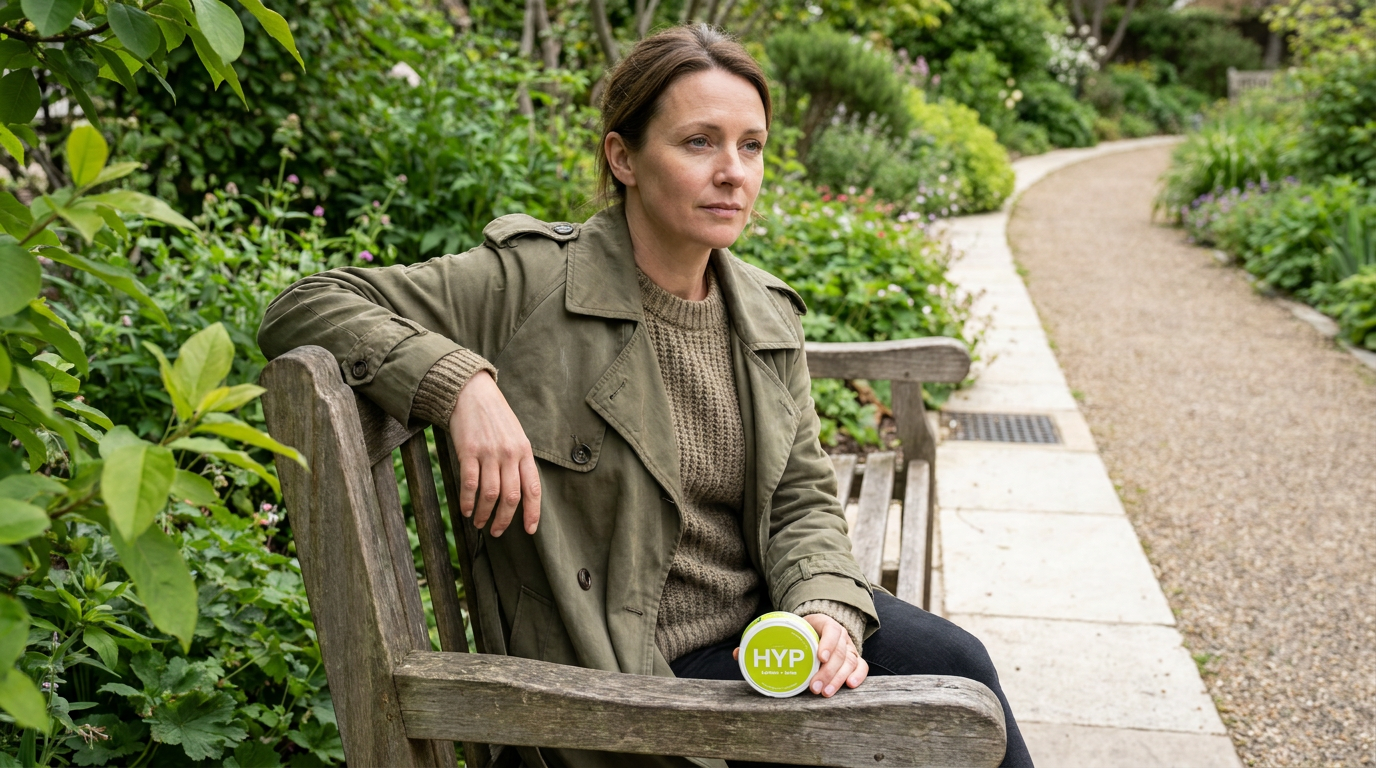
A pouch is placed under the top lip for up to 30 minutes, then taken out and put in the bin. You do not chew or swallow it. Our guide to what caffeine pouches are explains the format.
HYP provides 100mg of caffeine per pouch and is sugar-free.
18+. Contains caffeine (100mg per pouch). Not suitable for children, anyone pregnant or breastfeeding, or people sensitive to caffeine. Maximum 4 pouches a day, 3 to 4 hours apart.
Daily Intake and Clearance Profiles
Data from the European Food Safety Authority (EFSA) confirms that up to 400mg of caffeine daily (around 5.7mg/kg body weight) is not associated with safety concerns for healthy adults in the general population. However, individual clearance rates vary.
Adults seeking an alternative to energy drinks often look for measured portions. Insights on pouch formats from cream.energy (2025) note that modern products typically range from 50mg to 150mg of caffeine per unit.
| Factor | Description | Guidance Benchmark |
|---|---|---|
| Daily Limit | Total caffeine from all sources | Up to 400mg per day for healthy adults (EFSA) |
| Half-Life | Time for caffeine levels to drop by half | Typically 4 to 5 hours, but varies by individual |
| Timing | Spacing of servings | 3 to 4 hours between doses |
Frequently Asked Questions
Why does caffeine affect me more as I get older?
Responses to caffeine are highly individual. However, factors such as changes in liver blood flow and changes in sleep with age can mean that late-day caffeine is more noticeable for some people or has a more pronounced effect on sleep quality.Why does caffeine affect me so much?
Heightened sensitivity can stem from various factors, including genetic differences in the CYP1A2 enzyme, medication interactions, or lifestyle factors. If caffeine remains in your system longer due to slower metabolism, its effects may feel more intense.What is the half-life of caffeine in the body?
The half-life of caffeine—the time it takes for the amount of caffeine in your body to reduce by 50%—averages four to five hours, though this varies. For example, a 100mg serving taken at 4 pm could leave 50mg active in the system at 9 pm.What drink cancels out caffeine?
No beverage "cancels out" caffeine once it is in the bloodstream. Clearance depends on hepatic metabolism. Drinking water helps maintain hydration, but only time will eliminate caffeine from your system.Important Considerations
Research into stimulant metabolism highlights substantial individual variation. Genetic variations, smoking status, and certain medications can all alter how quickly your body clears caffeine.
If caffeine consumption becomes uncomfortable, adjusting intake timing or reducing portion sizes may help. When persistent symptoms such as heart palpitations or severe insomnia arise, seek professional advice from an NHS general practitioner or registered medical professional.
Calibrating Your Daytime Routine
Managing caffeine as you get older involves understanding your body's changing responses. By adjusting your intake timing and being mindful of portion sizes, UK adults can maintain their daily routines while safeguarding their rest.
For those seeking precise caffeine portioning, HYP offers sugar-free caffeine pouches.
18+. Contains caffeine (100mg per pouch). Not suitable for children, anyone pregnant or breastfeeding, or people sensitive to caffeine. Maximum 4 pouches a day, 3 to 4 hours apart.
References
- Harvard T.H. Chan School of Public Health - Academic Review (2024).
- National Center for Biotechnology Information (PubMed Central) - Peer-Reviewed Systematic Review (2018).
- Visible Body - Educational Resource (2024).
- European Food Safety Authority - Scientific Opinion on the Safety of Caffeine (2015).