Caffeine Pouches vs Energy Drinks: A Factual GB Comparison

🎯 Key Takeaway
The caffeine pouches vs energy drinks question comes down to format, sugar and how much caffeine you want per serving. A HYP caffeine pouch contains a fixed 100mg of caffeine, is sugar-free and involves no liquid. Energy drinks are canned drinks whose caffeine and sugar vary by brand and can size. Whichever you choose, check the label and keep your total caffeine within EFSA guidance of 400mg a day for healthy adults.
| Written by: The HYP Team | Published by: HYP |
ℹ️ Transparency Disclosure
This article is published by HYP, which makes caffeine pouches. We have kept to what our product contains, to label facts for other products and to public guidance from named sources, so that you can make your own choice.
18+. Contains caffeine (100mg per pouch). Not suitable for children, anyone pregnant or breastfeeding, or people sensitive to caffeine.
⚡ Quick Summary: Caffeine Pouches vs Energy Drinks
There is no single right answer in the comparison of caffeine pouches vs energy drinks. Each suits a different preference.
- Caffeine pouches: a drink-free, pocket-sized format with a fixed amount of caffeine per pouch (100mg for HYP); HYP pouches are sugar-free.
- Energy drinks: a familiar canned drink, available in a wide range of flavours, with caffeine and sugar that vary by brand and size.
Caffeine Pouches vs Energy Drinks at a Glance: Side-by-Side Comparison
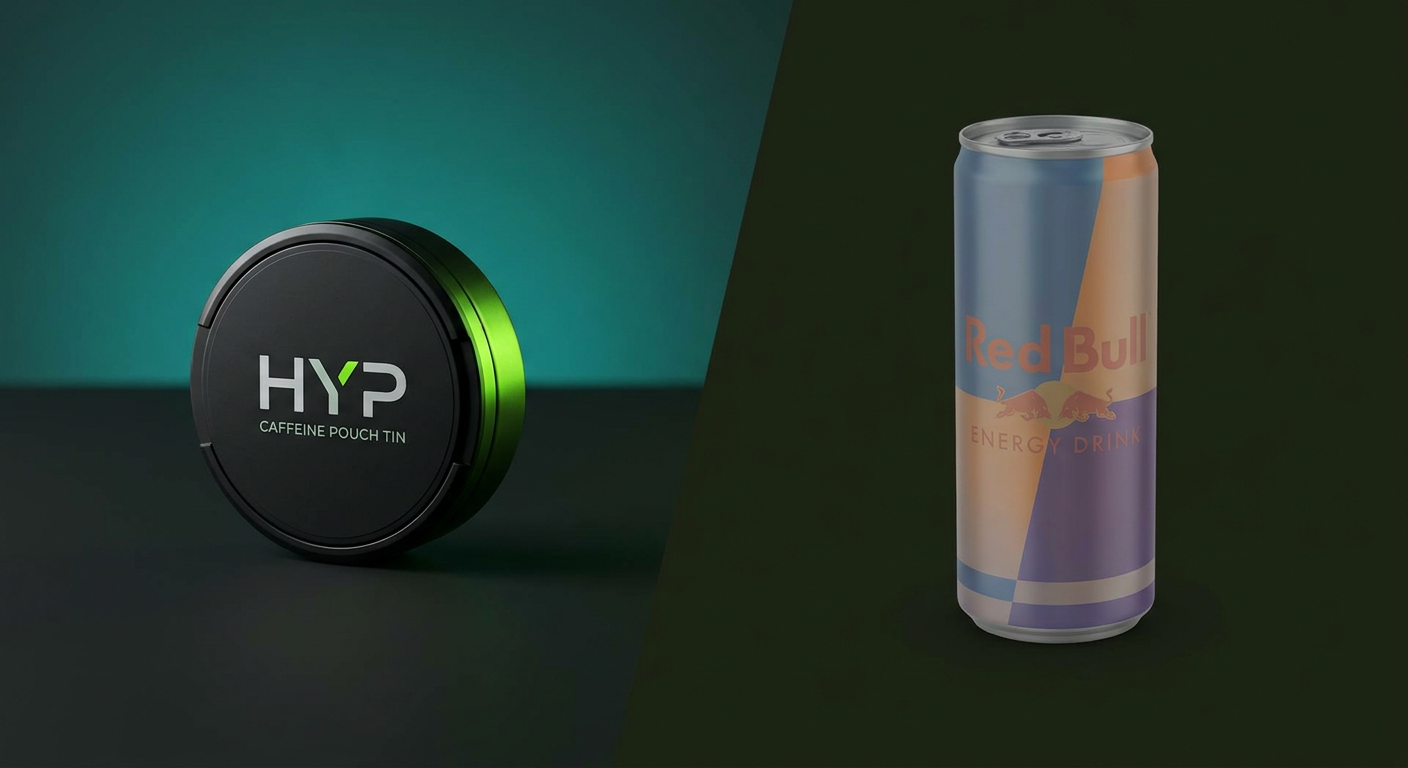
Here is a side-by-side breakdown of the practical, label-based differences in the caffeine pouches vs energy drinks comparison. Energy drink figures are examples taken from manufacturers' labels; check the can you are buying.
| Dimension | Caffeine Pouches (HYP) | Energy Drinks |
|---|---|---|
| Caffeine per Serving | 100mg per pouch | Varies: for example, 80mg in a 250ml can of Red Bull and 160mg in a 500ml can of Monster (manufacturers' labels) |
| Sugar | Sugar-free | Varies: standard versions contain added sugar; sugar-free versions are also sold |
| Format | Pouch in a pocket-sized tin, no liquid | Carbonated drink in a can |
| Other Facts | Nicotine-free and tobacco-free | Provides fluid; ingredients vary by brand |
Caffeine Pouches: What They Offer
Caffeine pouches suit adults who want caffeine without a drink. A pouch is placed between the upper lip and gum rather than swallowed. HYP pouches contain 100mg of caffeine each and are sugar-free, nicotine-free and tobacco-free. Maximum 4 pouches a day, 3 to 4 hours apart.
Pros:
- Sugar-Free: the NHS advises adults to have no more than 30g of free sugars a day, and the World Health Organization (WHO) (2015) recommends keeping free sugars below 10% of total energy intake.
- Fixed Amount: each HYP pouch contains 100mg of caffeine, so it is straightforward to keep count.
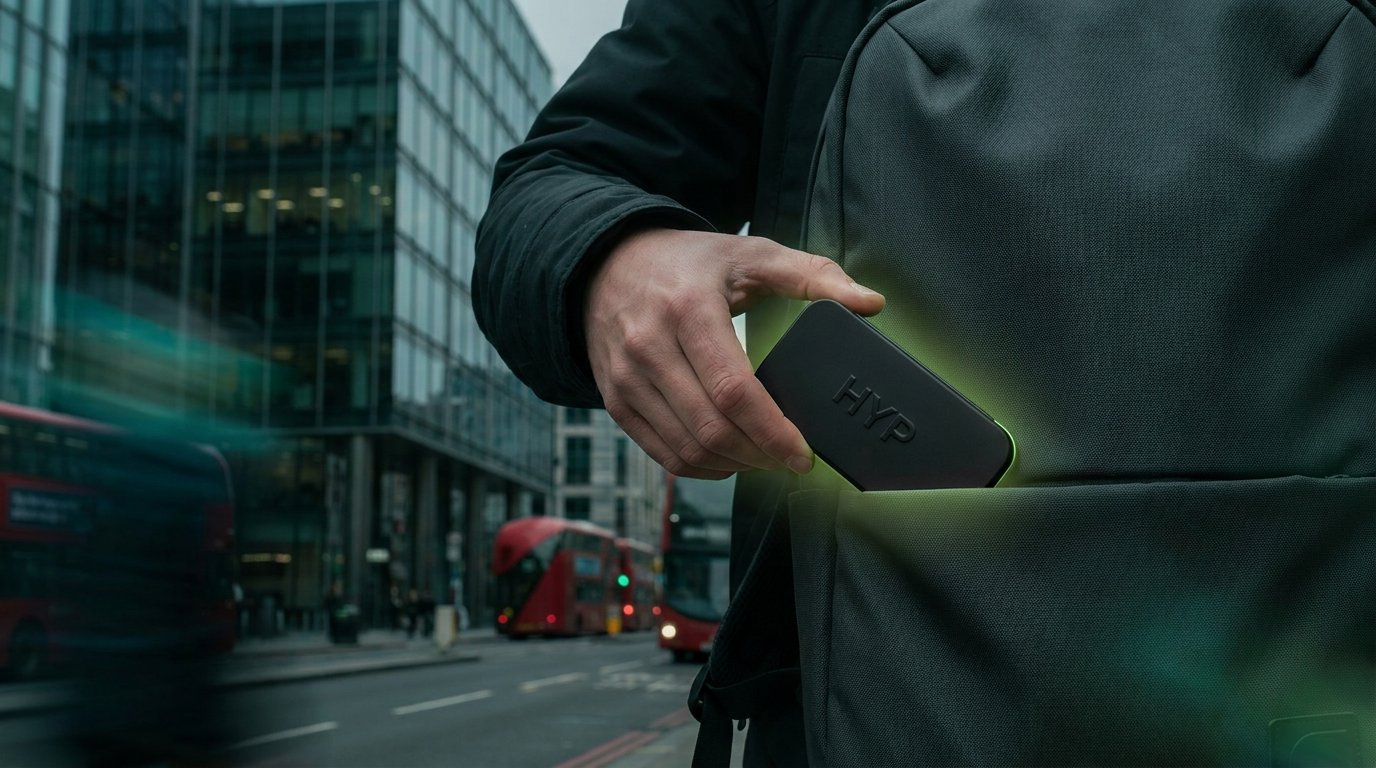
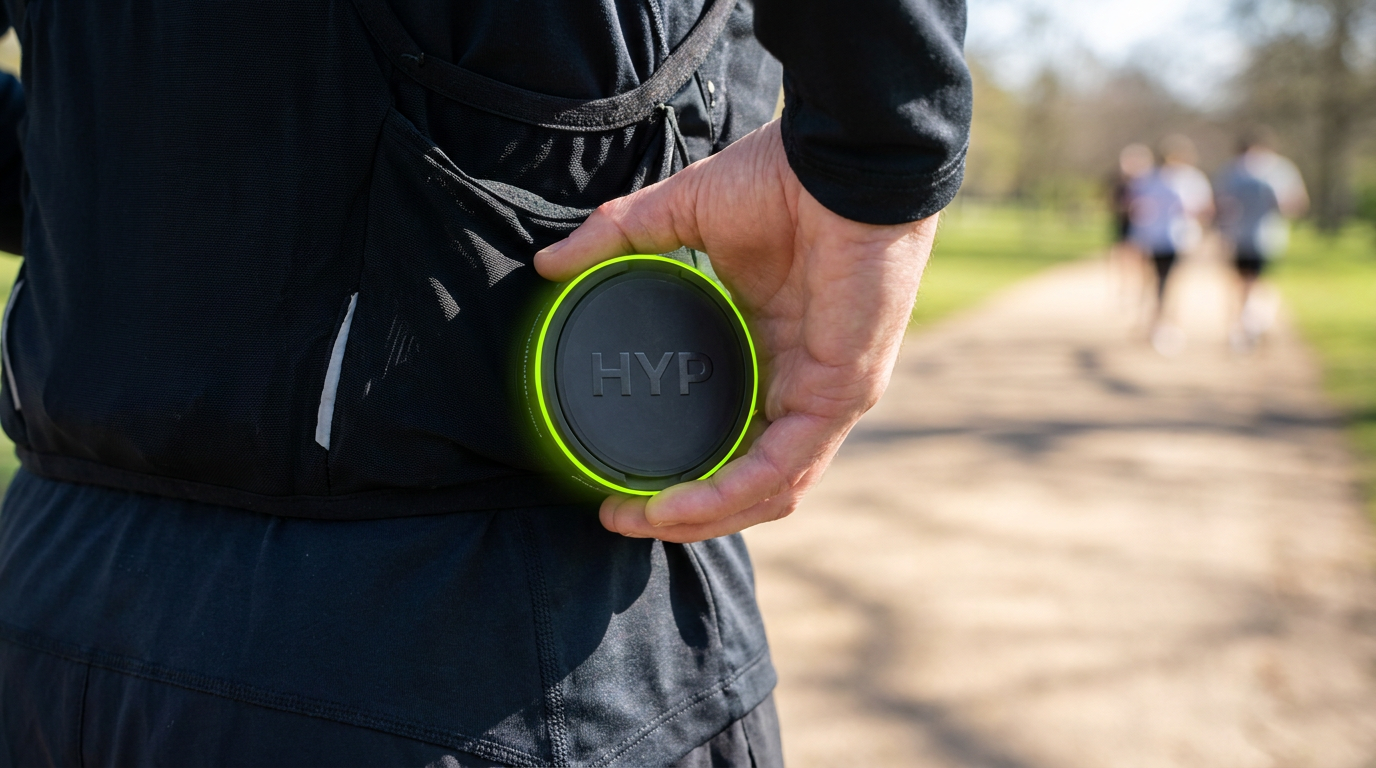
- Discreet & Portable: a small tin fits in a pocket, and there is no can to carry.
- No Liquid: nothing to open, pour or spill.
Cons:
- Your gums: pouches sit against the gum. If your gums become sore, stop using them and speak to a dentist. You can read more in our guide on whether caffeine pouches damage gums.
- No Hydration: it is not a drink, so you'll still need to drink fluids separately.
- Newer Product Category: less familiar and not as widely stocked as energy drinks.
- Not for Everyone: not suitable for anyone under 18, anyone pregnant or breastfeeding, or people sensitive to caffeine.
Energy Drinks: What They Offer
Energy drinks are a familiar option for people who prefer a cold, flavoured drink. They have been widely available for decades.
Pros:
- Wide Flavour Variety: available in many flavours, including sugar-free versions.
- Provides Fluid: it is a drink, so it contributes to your fluid intake.
- Widely Available: sold in supermarkets, petrol stations and vending machines. Data from Statista (2021) shows 10% of UK respondents drank them several times a week.
- Familiar Format: no new habit to learn.
Cons:
- Variable Sugar: standard versions contain added sugar, so check the label against the NHS advice of no more than 30g of free sugars a day for adults.
- Variable Caffeine: caffeine differs by brand and can size, from around 80mg in a 250ml can to 160mg or more in larger cans.
- Size: a 500ml can is bulky to carry.
When to Choose Each Option
Use this quick guide to decide which suits you.
- Choose caffeine pouches if... you are 18 or over and want a drink-free, pocket-sized format with a fixed 100mg of caffeine per pouch; HYP pouches are sugar-free.
- Choose energy drinks if... you want a cold, flavoured drink, and you are happy to check the label for caffeine and sugar.
Either way, add up your caffeine from all sources across the day and keep within EFSA and NHS guidance.
How Each Format Is Used
A caffeine pouch is placed between the upper lip and gum and removed after use. An energy drink is swallowed like any other drink.
There is limited published research comparing how quickly caffeine from pouches and from drinks is absorbed, and responses to caffeine vary from person to person, so we don't make speed claims for HYP pouches. For an explanation of the format, see our guide on how caffeine pouches work.
Important Considerations
A few points are worth keeping in mind.
First, research specifically on caffeine pouches is still limited compared with decades of studies on caffeinated drinks. Caffeine itself is extensively studied, which is why we refer to public guidance from the NHS and EFSA rather than making claims about our product.
Second, there are other options beyond these two, including black coffee, tea and pre-workout powders. Each differs in caffeine per serving, sugar and format, so compare labels.
Finally, if you have a health condition, particularly involving your heart, or are sensitive to stimulants, speak to your GP before using any caffeine product. The Harvard T.H. Chan School of Public Health notes that moderate caffeine intake can be part of a healthy diet for most adults, but that too much caffeine can cause unwanted effects.
Conclusion: Choosing What Suits You
When comparing caffeine pouches vs energy drinks, the most useful questions are how much caffeine is in a serving, how much sugar, and which format you prefer. HYP caffeine pouches are a drink-free format with a fixed amount of caffeine, and are sugar-free. Energy drinks are a familiar canned drink with caffeine and sugar that vary by product.
If you would like to try the pouch format, HYP pouches contain 100mg of caffeine each and are sugar-free, nicotine-free and tobacco-free. Explore our HYP Discovery Pack to find a flavour you like. Maximum 4 pouches a day, 3 to 4 hours apart.
18+. Contains caffeine (100mg per pouch). Not suitable for children, anyone pregnant or breastfeeding, or people sensitive to caffeine.
Which has more caffeine, coffee or energy drinks?
It depends on the serving size. The NHS gives around 100mg of caffeine for a mug of instant coffee, around 140mg for a mug of filter coffee and around 80mg for a 250ml can of energy drink. Larger energy drink cans contain more.
Direct Caffeine Comparison by Serving
Caffeine varies across brewing methods and drink sizes:
- Instant Coffee (1 mug): around 100mg (NHS).
- Filter Coffee (1 mug): around 140mg (NHS).
- Red Bull (250ml can): 80mg, which is 32mg per 100ml (manufacturer's label).
- Monster (500ml can): 160mg, which is 32mg per 100ml (manufacturer's label).
- HYP Caffeine Pouch (1 pouch): 100mg, with no liquid.
In the UK, drinks containing more than 150mg of caffeine per litre must carry a high caffeine warning on the label, so checking the can is the most reliable way to know what you are having.
What energy drink has the highest caffeine?
The answer changes as new products launch and differs between markets, so the label is the place to check. Some energy drinks sold in other markets contain 300mg or more per can. Mainstream GB examples include a 500ml can of Monster at 160mg and a 250ml can of Red Bull at 80mg, according to their labels.
High-Caffeine Drinks and Public Guidance
EFSA advises healthy adults to have no more than 400mg of caffeine a day, and the NHS advises no more than 200mg a day in pregnancy. EFSA's 2015 scientific opinion on caffeine refers to single doses of up to 200mg for healthy adults.
| Drink / Format | Serving Size | Caffeine Content |
|---|---|---|
| Monster Energy | 500ml | 160mg (label) |
| Red Bull | 250ml | 80mg (label) |
| HYP Caffeine Pouch | 1 pouch | 100mg |
Whatever you choose, add up caffeine from all sources across the day.
What organ is most affected by caffeine?
Caffeine acts mainly on the brain and central nervous system. According to the Harvard T.H. Chan School of Public Health, caffeine is a stimulant, and too much of it can cause effects such as restlessness, difficulty sleeping, headaches and a fast or abnormal heart rhythm.
Physiological Impact Across the Body
General points from public sources:
- The Brain (Central Nervous System): caffeine is a central nervous system stimulant, which is why it can affect sleep, particularly when taken close to bedtime (EFSA, 2015).
- The Heart: high caffeine intake can cause a fast heart rate in some people (Harvard T.H. Chan School of Public Health). If you have a heart condition, speak to your GP before using any caffeine product.
- Individual Differences: how people respond to caffeine varies, which is why guidance is given as a daily maximum rather than a target.
Frequently asked questions about caffeine pouches
Should I choose caffeine pouches or energy drinks?
It depends on the format you prefer. HYP caffeine pouches suit adults who want a drink-free format with a fixed amount of caffeine, and they are sugar-free. Energy drinks suit people who want a cold, flavoured drink. Check the label for caffeine and sugar whichever you choose.What is the difference in the caffeine pouches vs energy drinks debate?
The core difference is format and ingredients. A pouch is placed between the lip and gum and contains a fixed amount of caffeine (100mg for HYP); HYP pouches are sugar-free. An energy drink is a canned drink whose caffeine, sugar and other ingredients vary by brand.How much caffeine is in a pouch compared to an energy drink?
A HYP pouch contains 100mg of caffeine. For comparison, a 250ml can of Red Bull contains 80mg and a 500ml can of Monster contains 160mg, according to their labels. Maximum 4 pouches a day, 3 to 4 hours apart, and fewer if you have other caffeine that day.Who should not use caffeine pouches?
Caffeine pouches are not suitable for anyone under 18, anyone pregnant or breastfeeding, or people sensitive to caffeine. If you have a health condition, particularly involving your heart, speak to your GP first. Whatever you use, keep within EFSA guidance of 400mg of caffeine a day for healthy adults.What should I watch out for with caffeine pouches and energy drinks?
Your total caffeine is the main thing to watch with both. The Harvard T.H. Chan School of Public Health lists restlessness, difficulty sleeping, headaches and a fast heart rhythm among the effects of too much caffeine. With pouches, if your gums become sore, stop and speak to a dentist. With energy drinks, also check the sugar on the label.Can I use caffeine pouches for the gym?
Some adults use a caffeine pouch before exercise because there is no liquid to carry. We don't make claims about how caffeine pouches affect exercise. If you use one, count it towards your daily caffeine total. Maximum 4 pouches a day, 3 to 4 hours apart.Do caffeine pouches damage your teeth or gums?
There is limited published research on caffeine pouches and oral health. Pouches sit against the gum. If your gums become sore, swollen or bleed, stop using the product and see a dentist, as the NHS advises for gum problems.How quickly do you feel the effects of a caffeine pouch?
We don't make speed claims for HYP pouches. Responses to caffeine vary from person to person, and there is limited published research on pouches specifically. You can learn more about how caffeine pouches work here.Are caffeine pouches a good alternative to coffee?
They are an alternative format rather than a like-for-like replacement. In caffeine terms, a HYP pouch (100mg) is similar to a mug of instant coffee (around 100mg, according to the NHS). The difference is that a pouch needs no preparation or cup, while coffee offers a hot drink and a ritual many people enjoy.Is it cheaper to use caffeine pouches or drink energy drinks?
Prices vary by retailer, pack size and offers. To compare, work out the cost per serving at the time you buy, and check whether delivery is charged on top for online orders.References
- NHS - Guidance on caffeine in pregnancy, including typical caffeine amounts in common drinks.
- EFSA - (2015). Scientific opinion on caffeine, including daily and single-dose intake levels for healthy adults.
- Harvard T.H. Chan School of Public Health - (Accessed 2026). Academic overview of caffeine, moderate intake and the effects of too much caffeine.
- Statista - (2021). Survey data showing that 10 percent of UK respondents consumed energy drinks several times a week.
- World Health Organization (WHO) - (2015). Guideline recommending adults reduce free sugars intake to less than 10% of total energy intake.