Alternative to Energy Drinks: 5 Options Compared for GB Buyers

🎯 Key Takeaway
If you are looking for an alternative to energy drinks, the main options in Great Britain are caffeine pouches, coffee, green tea or matcha, natural energy drinks and nootropic drinks. They differ in caffeine per serving, sugar content, format and preparation. Checking the label for caffeine and sugar, and keeping your total caffeine within EFSA and NHS guidance, matters more than which format you pick.
| Written by: Lewis Sell | Reviewed by: Editorial Team, Industry Specialists |
ℹ️ Transparency Disclosure
This article is published by HYP, which sells caffeine pouches. It compares several caffeinated products, including our own. We have stuck to label facts and named public sources so that you can make your own choice.
Many people in Great Britain look for an alternative to energy drinks, whether to cut down on sugar, try a different format or keep closer track of how much caffeine they have. There are plenty of options, and comparing them is not always straightforward.
This guide compares five common alternatives side by side on caffeine per serving, sugar, format and convenience, using named sources wherever we quote figures.
Quick Summary: Alternatives to Energy Drinks
⚡ Quick Summary
There is no single right answer. Each alternative to energy drinks suits a different preference:
- Caffeine pouches: a drink-free, pocket-sized format with a fixed amount of caffeine per pouch.
- Coffee: a familiar hot drink and daily ritual for many people.
- Green tea / matcha: a hot tea-based drink; caffeine varies with the tea and how it is made.
- Natural energy drinks: the canned format, with caffeine from plant sources.
- Nootropic drinks: canned or bottled drinks that combine caffeine with botanical ingredients.
Why People in Great Britain Look for an Alternative to Energy Drinks
Energy drinks are widely consumed. According to a 2021 survey from Statista, 10% of UK respondents were drinking energy drinks several times a week. Sugar is one reason people compare options. The NHS advises that adults have no more than 30g of free sugars a day, and the World Health Organization (WHO) recommends keeping free sugars below 10% of total energy intake. Some sugar-sweetened energy drinks contain a large share of that in a single can, so the label is worth checking.
Caffeine is the other consideration. EFSA advises healthy adults to have no more than 400mg of caffeine a day, and the NHS advises no more than 200mg a day in pregnancy. EFSA's 2015 scientific opinion on caffeine also refers to single doses of up to 200mg for healthy adults. Whatever you choose, it helps to add up caffeine from all sources across the day.
Analysing Common Alternatives to Energy Drinks at a Glance
The table below compares the five alternatives on caffeine per serving, sugar and format. Caffeine figures for drinks vary by brand, cup size and preparation, so treat them as a guide and check the label.
18+. Contains caffeine (100mg per pouch). Not suitable for children, anyone pregnant or breastfeeding, or people sensitive to caffeine.
| Dimension | Caffeine Pouches (HYP) | Coffee | Green Tea / Matcha | Natural Energy Drinks | Nootropic Drinks |
|---|---|---|---|---|---|
| Caffeine per Serving | 100mg per pouch | Around 100mg (mug of instant) to 140mg (mug of filter), per NHS figures | Varies with the tea, the amount of powder and preparation | Varies by brand; check the label (the NHS lists a 250ml can of energy drink at around 80mg) | Varies by brand; check the label |
| Sugar | Sugar-free | Depends on what you add: sugar and syrups | None when unsweetened | Varies; check the label | Varies; check the label |
| Format & Portability | Pouch in a pocket-sized tin, no liquid | Hot drink in a cup | Hot drink in a cup | Can | Can or bottle |
| Preparation | None | Brewing or buying | Brewing or whisking | None | None |
Caffeine Pouches: A Drink-Free Format
Suited to: adults who want caffeine in a small, drink-free format that fits in a pocket.
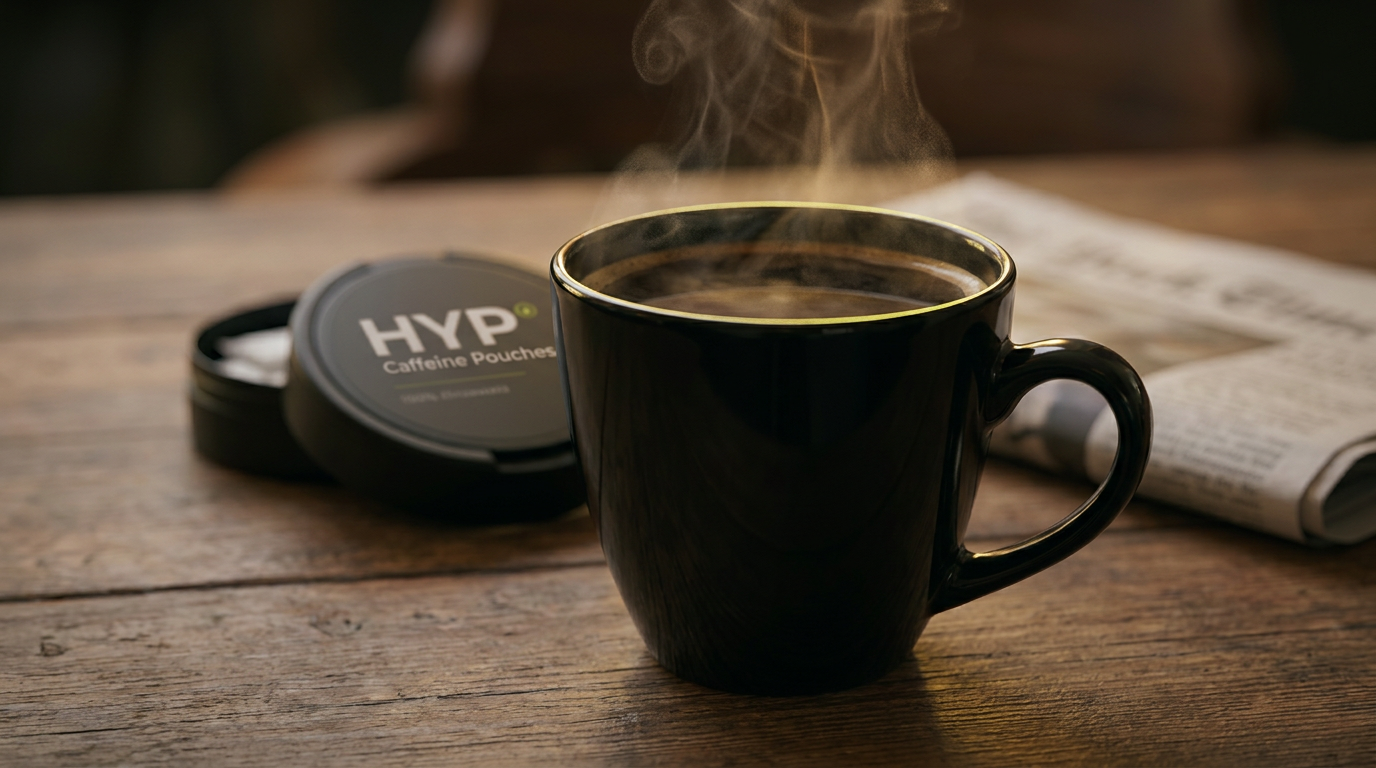
Caffeine pouches are small, soft pouches placed between the lip and gum rather than swallowed as a drink. HYP pouches contain 100mg of caffeine each and are sugar-free, nicotine-free and tobacco-free. You can read more about the format in our guide on how caffeine pouches work.
18+. Contains caffeine (100mg per pouch). Not suitable for children, anyone pregnant or breastfeeding, or people sensitive to caffeine.
How to use: place one pouch between your upper lip and gum and remove it after use. Maximum 4 pouches a day, 3 to 4 hours apart.
Pros:
- Drink-free: no liquid to carry or prepare.
- Portable: a small tin fits in a pocket or bag.
- Fixed amount: 100mg of caffeine per pouch, so you know how much you are having.
- Sugar-free: and nicotine-free and tobacco-free.
- Discreet: no can or cup needed.
Cons:
- The format can feel unfamiliar to new users.
- Pouches sit against the gum; if your gums become sore, stop using them and speak to a dentist.
- The flavour range is smaller than the drinks market.
- They don't provide hydration.
Coffee: A Familiar Daily Ritual
Suited to: people who enjoy coffee as a drink and as part of their routine.
Coffee is part of the day for many people and is the most familiar option in any comparison of an alternative to energy drinks. A 2024 overview from the Harvard T.H. Chan School of Public Health notes that moderate intake can be part of a healthy diet. Caffeine content varies with the type of coffee and cup size: the NHS gives around 100mg for a mug of instant coffee and around 140mg for a mug of filter coffee.
Pros:
- A familiar taste and ritual.
- Widely available across Great Britain.
- No sugar when drunk black.
Cons:
- Caffeine varies by cup, size and preparation, which makes it harder to keep track.
- Syrups, sugar and milk change the sugar content.
- Needs a cup and is less portable.
Green Tea / Matcha: A Hot Drink Option
Suited to: people who prefer a hot tea-based drink.
Green tea and its powdered form, matcha, are a popular alternative to energy drinks. Green tea naturally contains caffeine along with catechins and the amino acid L-theanine. The caffeine in green tea and matcha varies with the tea, how much powder is used and how it is made.
Pros:
- Caffeine varies with the tea and preparation.
- No sugar when unsweetened.
- A relaxed ritual for those who enjoy tea.
Cons:
- The earthy, grassy taste is an acquired one.
- Preparing high-quality matcha can be time-consuming and expensive.
- Needs preparation and is less portable.
Natural Energy Drinks: A Canned Option
Suited to: people who prefer a ready-to-drink can.
If you are looking for an alternative to Monster energy drinks but want to stay with a can, natural energy drinks are one option. Brands like Tenzing use caffeine from plant sources such as green coffee beans. As retailers like Holland & Barrett show, they are sold as their own category within canned drinks. Sugar and caffeine vary by brand, so check the label.
Pros:
- Caffeine from plant sources.
- Sugar content varies by brand; check the label.
- The familiar can format needs no preparation.
Cons:
- Some still contain added sugar.
- Can cost more per serving than coffee or tea made at home.
- Carbonation is not to everyone's taste.
Nootropic Drinks: Caffeine With Added Botanicals
Suited to: people interested in drinks that combine caffeine with other botanical ingredients.
Nootropic drinks combine caffeine with ingredients such as L-theanine, lion's mane or ashwagandha. Ingredients, caffeine and sugar vary by brand, so check the label. They are another alternative to coffee and energy drinks in a ready-to-drink format.
Pros:
- A wide variety of flavours and ingredients.
- Sugar content varies; check the label.
- Ready to drink.
Cons:
- They are usually priced at a premium, which adds up with daily use.
- Ingredient lists can be long and amounts vary between brands.
- The flavour can be an acquired taste.
- Still a drink to carry and finish.
When to Choose Each Option
The right choice comes down to the format you prefer and how much caffeine you want per serving.
- Choose HYP caffeine pouches if... you are 18 or over and want a drink-free, pocket-sized format with a fixed 100mg of caffeine per pouch. 18+. Contains caffeine (100mg per pouch). Not suitable for children, anyone pregnant or breastfeeding, or people sensitive to caffeine.
- Choose coffee if... you enjoy the taste and the ritual of a hot drink.
- Choose green tea / matcha if... you prefer a hot tea-based drink.
- Choose natural energy drinks if... you like the can format and want caffeine from plant sources.
- Choose nootropic drinks if... you are interested in botanical blends and are happy to check the evidence behind any claims.
Whichever you choose, keep track of your total caffeine from all sources across the day.
Common questions about energy drink alternatives
Which alternative to energy drinks should I choose?
It depends on the format you prefer and how much caffeine you want per serving. Caffeine pouches suit adults who want a drink-free format with a fixed amount of caffeine, coffee and green tea suit people who enjoy hot drinks, and natural or nootropic drinks suit people who prefer a can. Check the label for caffeine and sugar whichever you pick.What should I look for in an energy drink alternative?
Check the caffeine per serving and the sugar content on the label. The NHS advises adults to have no more than 30g of free sugars a day, and the World Health Organization (2015) recommends keeping free sugars below 10% of total energy intake. Unsweetened tea and black coffee have no added sugar, and HYP caffeine pouches are sugar-free.What gives you energy without energy drinks?
Sleep, diet, hydration and regular activity all play a part in how tired you feel. The NHS suggests looking at your sleep, eating regularly, being active and drinking enough fluids if you often feel tired, and seeing a GP if tiredness carries on.How can I compare energy drinks?
Compare the caffeine and sugar per can on the label. In the UK, drinks containing more than 150mg of caffeine per litre must carry a high caffeine warning on the label. Sugar varies widely between standard and sugar-free versions, so look at the per-can figure rather than the brand.Is any caffeine source right for everyone?
No. Caffeine from any source, whether coffee, tea, energy drinks or caffeine pouches, counts towards your daily total. EFSA advises healthy adults to have no more than 400mg a day, and the NHS advises no more than 200mg a day in pregnancy. HYP is not suitable for children, anyone pregnant or breastfeeding, or people sensitive to caffeine. If you have a heart condition, speak to your GP before using any caffeinated product.How do two cans of Monster a week fit with caffeine guidance?
Check the caffeine and sugar per can on the label and add them to everything else you have that day. EFSA guidance for healthy adults is up to 400mg of caffeine a day, and EFSA (2015) refers to single doses of up to 200mg for healthy adults. It matters most on days when you have more than one can or also drink coffee or tea.How do Monster and Red Bull compare?
They are similar products: both are caffeinated energy drinks sold in several can sizes, including sugar-free versions. Caffeine and sugar differ by product and can size, so compare the labels directly.How does caffeine affect the heart?
High caffeine intake can cause a fast heart rate in some people. The Harvard T.H. Chan School of Public Health (2024) lists this among the effects of too much caffeine. If you have a heart condition or high blood pressure, speak to your GP before using any caffeinated product.Is one can of Monster a day within guidance?
That depends on the can and on what else you consume that day. Compare the caffeine on the label with EFSA guidance of 400mg a day for healthy adults, and the sugar with the NHS advice of no more than 30g of free sugars a day for adults. If you have a health condition, speak to your GP.Do caffeine pouches damage your gums?
There is limited published research on caffeine pouches and oral health. Pouches sit against the gum. If your gums become sore, swollen or bleed, stop using the product and see a dentist, as the NHS advises for gum problems. For more, see our guide on whether caffeine pouches damage gums.Important Considerations
Research on some newer ingredients, such as certain nootropics, is still emerging, and individual responses to caffeine vary. The long-term effects of daily use of some newer products are less well documented than coffee and tea. We have based the figures in this article on the named sources listed below.
Caffeine is not the only factor in how energetic you feel. Sleep, a balanced diet, staying hydrated and regular activity all matter, and no caffeinated product replaces them.
If you have a health condition, particularly one involving your heart or blood pressure, speak to your GP or a registered dietitian before choosing any alternative to energy drinks that contains caffeine.
Choosing an Alternative to Energy Drinks
Finding an alternative to energy drinks in Great Britain means looking beyond the corner shop chiller. Coffee and tea remain popular, and newer formats such as caffeine pouches and nootropic drinks add more choice. The right option depends on the format you prefer, how much caffeine you want per serving and how much sugar it contains.
If you would like to try a drink-free format, HYP pouches contain 100mg of caffeine each and are sugar-free, nicotine-free and tobacco-free. Try The Discovery Pack to explore the HYP flavours. Maximum 4 pouches a day, 3 to 4 hours apart.
18+. Contains caffeine (100mg per pouch). Not suitable for children, anyone pregnant or breastfeeding, or people sensitive to caffeine.
References
- Harvard T.H. Chan School of Public Health - A 2024 overview of caffeine sources, effects and intake levels.
- Statista - A 2021 survey on energy drink consumption frequency in the UK.
- World Health Organization (WHO) - The 2015 guideline on sugars intake for adults.
- EFSA - The 2015 scientific opinion on caffeine.
- NHS - Guidance on caffeine in pregnancy, including typical caffeine amounts in common drinks.
- Holland & Barrett - A retail page showing examples of natural energy drinks sold in the UK.
How do different sources of caffeine compare?
Caffeine is found naturally in coffee, tea, cacao, yerba mate and guarana, and is also added to products such as energy drinks and caffeine pouches. The caffeine molecule is the same whichever source it comes from. What differs is how much is in a serving and what comes with it, such as sugar in some drinks or catechins in tea.
EFSA advises most healthy adults to keep total caffeine to no more than 400mg a day, and the NHS advises no more than 200mg a day in pregnancy, across all sources combined.
What are some natural sources of caffeine?
Caffeine occurs naturally in a number of plants. The most common sources are coffee beans, tea leaves, cacao, yerba mate and guarana seeds, each of which also contains other natural compounds.
Popular natural caffeine sources include:
- Coffee Beans: contain chlorogenic acids alongside caffeine.
- Camellia Sinensis (Green and Black Tea): contains epigallocatechin gallate (EGCG) and the amino acid L-theanine.
- Guarana Seeds: from a South American climbing plant.
- Yerba Mate: a traditional South American brewed drink.
- Cacao: contains small amounts of caffeine alongside theobromine.
What to replace coffee with?
Coffee alternatives include green tea, matcha, chicory root and nicotine-free caffeine pouches. Green tea and matcha contain caffeine and are prepared as hot drinks. Chicory root gives a roasted, coffee-like flavour with no caffeine. Caffeine pouches provide a set amount of caffeine in a drink-free format.
The right substitute depends on whether you want to reduce caffeine, keep a hot drink ritual or avoid drinks altogether:
| Alternative | Caffeine per Serving | Format | Suited To |
|---|---|---|---|
| Matcha / Green Tea | Varies with the tea, powder and preparation | Hot drink | A morning ritual |
| Chicory Root | 0mg | Hot drink | Evenings or caffeine-free days |
| Caffeine Pouches (HYP) | 100mg per pouch | Sugar-free pouch, no liquid | Adults who want a drink-free format |
| Yerba Mate | Varies with preparation | Hot drink | People who enjoy herbal brews |
Do energy drinks raise cholesterol?
Energy drinks do not contain dietary cholesterol. NHS advice on lowering cholesterol centres on overall diet, being more active and other lifestyle factors, rather than on any single drink.
If you are concerned about your cholesterol or heart health, speak to your GP, who can arrange a cholesterol test and give advice based on your circumstances.
Related Resources
Conclusion
Choosing the Right Alternative for You
Coffee, green tea, natural energy drinks, nootropic drinks and caffeine pouches each offer a different way to have caffeine. Comparing them on caffeine per serving, sugar and format, using the label and named sources, is a reliable way to choose.
Whichever you pick, add up your caffeine from all sources and stay within EFSA and NHS guidance. If you are unsure whether caffeine is right for you, speak to your GP.